Patio vs Deck: Which Outdoor Space Is Right for You?
- Keller Lawn & Landscape
- Jun 30
- 7 min read
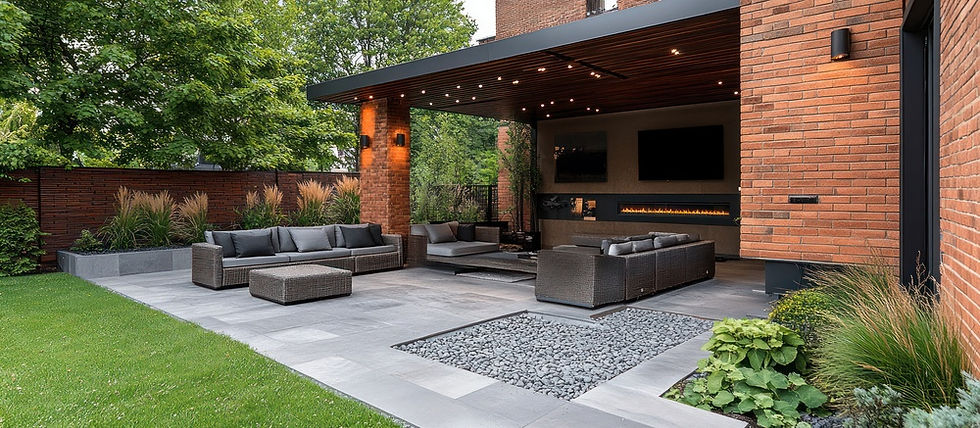
A backyard can feel unfinished without a dedicated place to gather, relax, or enjoy time outside. Some homeowners picture a paved patio with a fire pit and lounge seating. Others want a raised deck connected directly to the kitchen or family room. The challenge starts when both options sound appealing.
The patio vs deck decision is less about trends and more about how the space will function every day. Yard elevation, maintenance expectations, budget, and lifestyle all influence the outcome. A feature that works perfectly for one property can feel impractical on another.
For homeowners planning smarter backyard upgrades, the goal is to create an outdoor living space that feels connected to the home, comfortable to use, and built for Connecticut’s seasonal weather.
What’s In This Guide
Quick Facts
✔ Patios fit flat yards and low-maintenance outdoor living.
✔ Decks suit raised entrances, slopes, and views.
✔ Patio materials affect look, durability, and upkeep.
✔ Smart backyard upgrades account for drainage, shade, and flow.
✔ Choose based on lifestyle, not looks alone.
What Is the Difference Between a Patio and a Deck?
Although patios and decks serve similar purposes, they are built differently and suit different types of properties.
What Is a Patio?
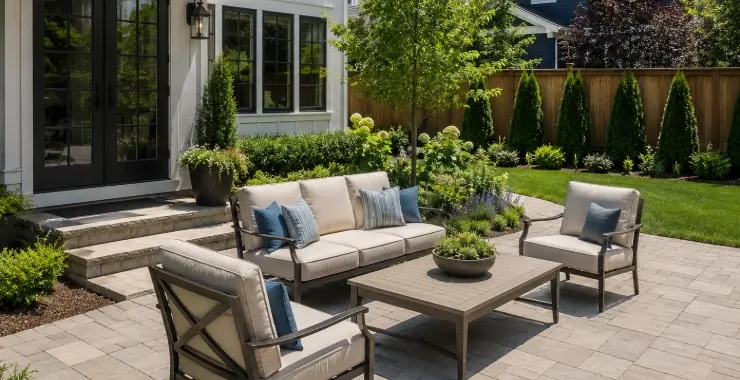
A patio is a ground-level outdoor surface typically built from hardscape materials. Common patio materials include:
Concrete
Brick
Pavers
Flagstone
Natural stone
Patios are often integrated directly into landscaping designs, making them ideal for seating areas, outdoor dining, fire pits, walkways, and garden transitions. Because they sit at grade level, patios usually work best on flatter properties with stable drainage conditions.
A professionally designed patio can feel like a natural extension of the backyard instead of a separate structure.
What Is a Deck?
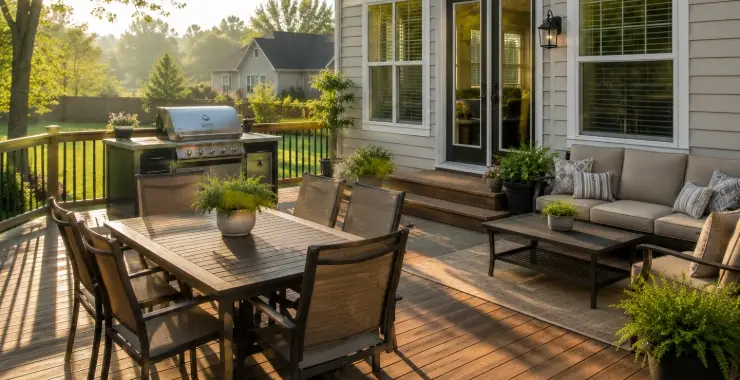
A deck is an elevated platform usually attached to the home. Decks are commonly built with:
Pressure-treated lumber
Cedar
Hardwood
Composite decking
PVC decking
Unlike patios, decks rely on framing systems, footings, support posts, stairs, and railings. Decks must be properly designed to support structural loads and resist movement from weather and use.
Decks are often the better fit for sloped yards, elevated entrances, or homes where outdoor access begins above ground level.
Patio vs Deck: Quick Comparison for Homeowners
The easiest way to narrow the patio vs deck choice is to think about how the space will actually be used.
Feature | Patio | Deck |
Best Yard Type | Flat or gently sloped | Sloped or elevated |
Common Materials | Stone, pavers, concrete | Wood, composite, PVC |
Maintenance Level | Typically lower | Moderate to higher |
Connection to Landscaping | Strong integration | More architectural |
Best For | Fire pits, gardens, lounging | Elevated access, views |
Structural Requirements | Less complex | More complex |
Lifespan Depends On | Base prep and drainage | Material and maintenance |
Is a Deck or Patio Better for Your Lifestyle?
The better question is which option fits the way you use your backyard every day. A patio and deck can both create a comfortable outdoor living space, but they support different routines, layouts, and design goals.
Outdoor Dining and Entertaining
Dining and entertaining areas need more than enough square footage. The space should make it easy to carry food, arrange furniture, move between seating zones, and keep guests comfortable.
A Patio May Be Better If You Want
A patio is often a practical choice for hosting because it sits directly on the ground and can support heavier outdoor features. It also connects naturally to lawns, gardens, and walkways.
A stable surface for dining tables, lounge chairs, and grilling stations
Space for heavier features like outdoor kitchens or fire pits
A layout that connects easily to the lawn, walkways, and planting beds
Flexible design using patio materials such as pavers, concrete, brick, or natural stone
Patios are especially useful when you want your outdoor living space to feel like part of the backyard rather than a separate structure.
A Deck May Be Better If You Want
A deck is often more convenient when the main living area sits above the yard. It creates a direct connection from the home to the outdoor space, which can make everyday dining and entertaining easier.
Direct access from a raised kitchen, dining room, or living area
Easier movement between indoor and outdoor spaces
A better setup for homes with sloped backyards
A raised gathering area with views, airflow, or a more open feel
For frequent entertaining, think about where guests will move most. A patio keeps people closer to the yard. A deck keeps the gathering space closer to the house.
Relaxation and Everyday Use
The best relaxation space depends on the feeling you want. Some homeowners want a quiet garden-side retreat, while others prefer a raised area that feels like an extension of the home.
A Patio May Be Better If You Prefer
A patio creates a more grounded setting. It can be surrounded by shrubs, trees, retaining walls, or garden beds to create privacy and a calmer atmosphere.
A calm seating area surrounded by landscaping
A fire pit or garden-side lounge space
More privacy from shrubs, trees, or retaining walls
A low-profile design that blends into the yard
A patio works well when your goal is to create a relaxed space that feels connected to the landscape.
A Deck May Be Better If You Prefer
A deck gives the backyard a more elevated feel, both physically and visually. It can be a good fit when you want to enjoy views, create separation from the lawn, or extend the main floor outdoors.
A raised view of the backyard
More separation from the lawn or garden
Better airflow in warm weather
A space that feels like an extension of the home
Decks are often a good fit when homeowners want their outdoor area to feel connected to the main level of the house.
Families and Functional Backyard Space
For families, the right choice often comes down to movement, safety, and flexibility. The space should support everyday use, not just occasional entertaining.
A Patio May Be Better for Families Who Need
A patio can make the backyard easier to navigate because it usually sits at the same level as the lawn. That can be helpful for families who want fewer stairs and smoother transitions between activity areas.
Easy access between seating areas and the lawn
Fewer elevation changes
Smooth transitions between play areas, gardens, and gathering zones
A practical foundation for future backyard upgrades
Patios can be especially helpful when the backyard is used for both relaxing and everyday family activity.
A Deck May Be Better for Families Who Need
A deck can solve layout challenges when the home sits above the yard or the property slopes away from the house. It creates a defined outdoor area that feels connected to indoor living spaces.
A defined outdoor area attached to the home
Stairs leading down to a sloped or lower yard
Railings, gates, or built-in seating for added structure
A raised platform that works with the home’s existing layout
Decks may require more planning for stairs, railings, gates, and structural inspections, but they can solve layout issues that a patio cannot.
Yard Conditions Matter More Than Most Homeowners Realize
One of the biggest factors in the patio vs deck decision is the property itself.
Flat Yards Usually Favor Patios
A patio installation generally requires:
Proper grading
A compacted base
Reliable drainage
Stable soil conditions
When installed correctly, patios can last for years with minimal movement or settling.
Poor drainage, however, can create problems over time. Water pooling beneath pavers or concrete may lead to uneven surfaces or erosion.
Sloped Yards Often Favor Decks
Decks can adapt more easily to uneven terrain because the structure is elevated above grade. Instead of major excavation or retaining wall work, a deck can create usable square footage over a slope.
Homes with raised back doors also tend to pair naturally with decks.
Drainage and Climate Should Influence Material Choices
Freeze-thaw cycles, moisture exposure, shade, and sun exposure all affect material performance and durability. In Connecticut, patios and decks need to withstand seasonal changes, heavy rain, winter conditions, and summer use.
That is why experienced landscape and outdoor living contractors evaluate more than appearance alone. Material selection, grading, drainage planning, and installation methods all influence long-term durability.
How to Decide Between a Patio and a Deck
Homeowners can simplify the decision process by focusing on a few key factors.
Step 1: Evaluate the Yard
Flat yards naturally support patios. Sloped properties often work better with decks.
Step 2: Think About Daily Use
Consider how the space will realistically be used:
Dining
Grilling
Lounging
Entertaining
Fire pits
Gardening
Step 3: Consider Maintenance Preferences
Some homeowners enjoy maintaining natural wood. Others want the lowest-maintenance option possible.
Be honest about long-term upkeep expectations.
Step 4: Plan Beyond the Structure
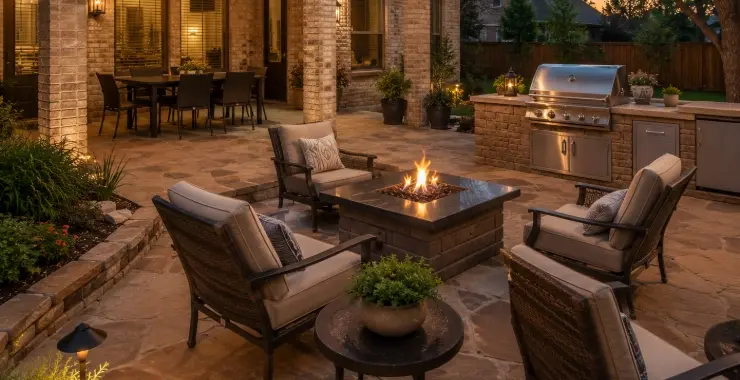
An outdoor living space should connect naturally with:
Walkways
Planting beds
Lighting
Seating zones
Privacy features
Drainage systems
The patio or deck is only one piece of the full backyard design.
Step 5: Talk With a Local Outdoor Living Professional
A local contractor can evaluate drainage, grading, material options, access points, layout, and long-term maintenance before work begins.
Frequently Asked Questions (FAQs)
Is a patio better for small backyards?
Yes. A patio can work well in a small backyard because it sits at ground level and can be shaped around gardens, walkways, and seating areas without taking up visual space.
Can a deck be built over an old patio?
Sometimes, but the existing patio must be inspected first. The surface, drainage, footings, and structural support need to be suitable for a safe deck installation.
What is the lowest-maintenance option for outdoor living?
A paver or stone patio is often low maintenance. For decks, composite or PVC decking usually requires less upkeep than natural wood.
Can a patio or deck add usable space to the home?
Yes. A well-planned patio or deck can create a functional outdoor living space for dining, relaxing, entertaining, and everyday backyard use.
Should landscaping be planned before building a patio or deck?
Yes. Planning landscaping early helps improve drainage, privacy, shade, walkways, lighting, and the overall flow of the outdoor space.
Build an Outdoor Space That Fits the Way You Live
The best outdoor spaces feel natural, functional, and tailored to the property itself. The right choice comes down to how the space will be used, how much maintenance feels realistic, and how the backyard connects to the home overall.
For homeowners in Connecticut planning thoughtful backyard upgrades and a more functional outdoor living space, Keller Landscaping can help design and build a solution that fits both the property and the lifestyle.
Schedule a consultation with Keller Landscaping to plan a patio or deck that fits your property.


Comments